OBSERVE
See what is actually there. Separate what is known, reported, assumed and missing.
This is the spine of ORVIA. Everything else — our technology, evidence systems, products and services — exists to support it.
See it. Check it. Confirm it. Understand it. Own it.
See what is actually there. Separate what is known, reported, assumed and missing.
Bring records, chronology, accounts, decisions and missing information into one clearer picture.
Test what is supported, contradicted, disputed or still unknown. Do not manufacture certainty.
Ask what the evidence means, what alternative explanations exist and whose perspective is missing.
Turn understanding into a proportionate human-owned next step, then check whether it worked.
Not just the policy. Not just the report. Not just one person's version.
ORVIA keeps source material, assertions, interpretation, dissent and action separate so they do not collapse into one convenient narrative.

We actively look for missing evidence, contradictions, opposing perspectives, alternative explanations and uncomfortable facts.
Absence matters. We make gaps visible rather than filling them with assumptions.
Disagreement stays visible. Competing accounts are not silently blended together.
We test reasonable alternatives before hardening interpretation into a conclusion.
If the evidence challenges the client, we say so. Truth before comfort.
An action is not truly complete simply because somebody changed its status to closed.
Was the agreed action actually carried out?
Can we demonstrate that it happened as intended?
Did it solve or improve the original problem?
Did the improvement remain in place when checked again?
People can say one thing and eventually find something very different recorded in a system.
We ask whether it was expressed properly, recorded accurately, interpreted fairly, kept in context and reflected in the eventual decision.
The deeper method calls this Disclosure Fidelity. The public principle is simpler: do not let information lose its meaning as it travels.
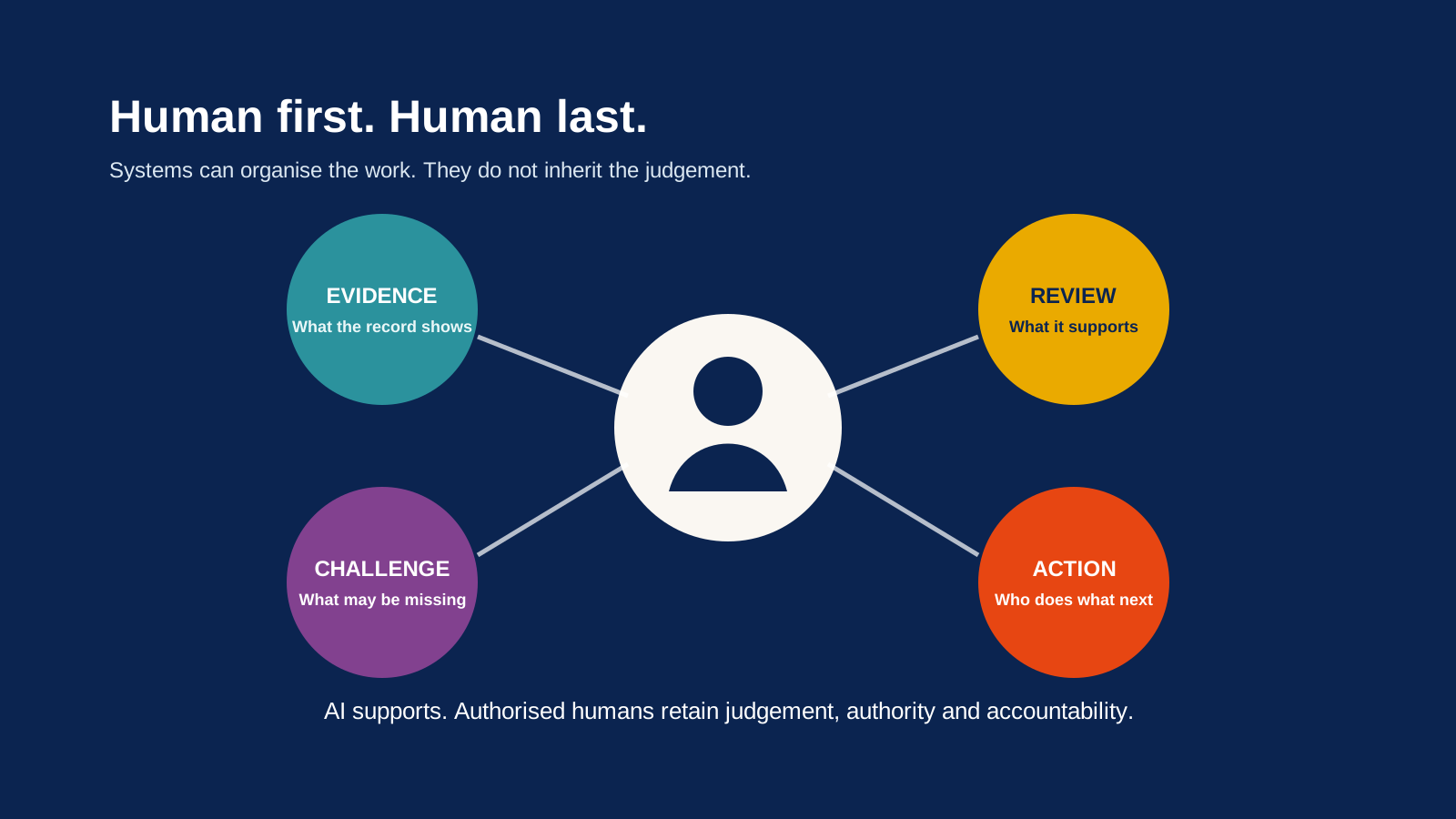
AI and automation can sort, search, compare, summarise, challenge, identify gaps, track actions and build chronologies.
They do not become the decision-maker. Human judgement remains at the beginning and end of consequential work.
You do not need to learn the architecture to use ORVIA. It exists to make ownership, evidence, challenge and verification reliable behind the scenes.
Bring the information in.
Control ownership, workflow, actions and escalation.
Protect evidence, provenance and versions.
Challenge the picture and find what may be missing.
Verify what actually changed.
Retain judgement and accountability.
Start with the evidence. Build the chronology. Test the assumptions. Prepare properly. When the situation needs deeper help, ORVIA can step in.
Human first. Human last.