
Why ORVIA exists
A human being should never disappear inside the system designed to support them.
Systems collect information. Professionals make decisions. Organisations need evidence. But somewhere between the form, the report, the dashboard and the meeting, the person can become harder to see.
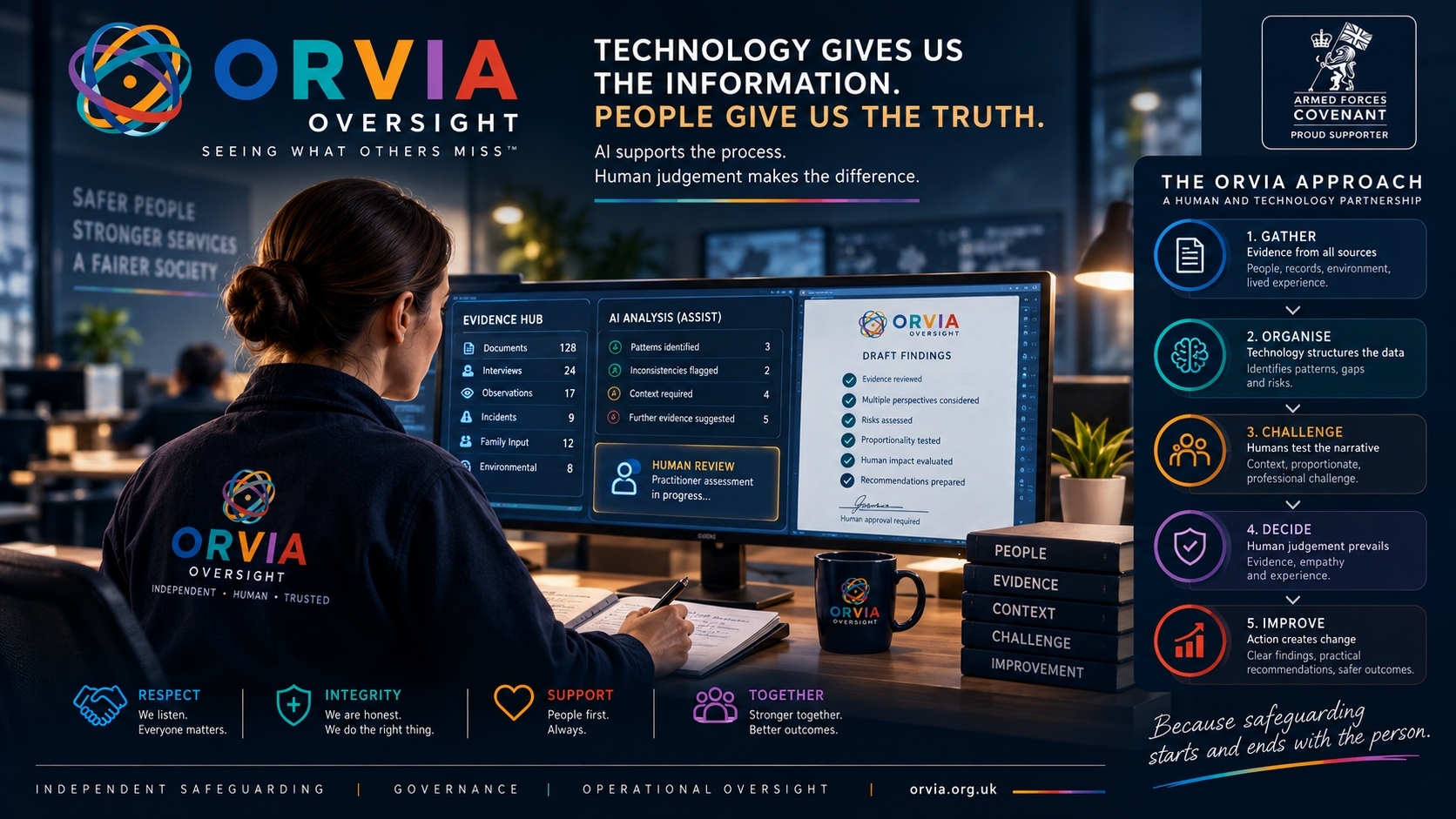
ORVIA exists to bring the human experience, the evidence and the operational reality back into the same picture — so concerns can be understood properly and action can be based on what the evidence actually supports.

John McGill
Founder & Group Chief Executive
“I built ORVIA because I kept seeing more information, more systems and more paperwork — but still no clear answer to what was actually happening to the person.”
The reason for looking wider
Paperwork can look right while somebody's actual experience tells a different story.
That gap is where ORVIA starts. We do not assume the records are wrong, and we do not assume the concern is right. We bring the different realities together and test them against each other.



The whole picture
ORVIA compares different realities instead of relying on one version of events.
A report may describe one thing. The records may show another. What people observe and experience may add important context. ORVIA puts those perspectives alongside each other before reaching a view.
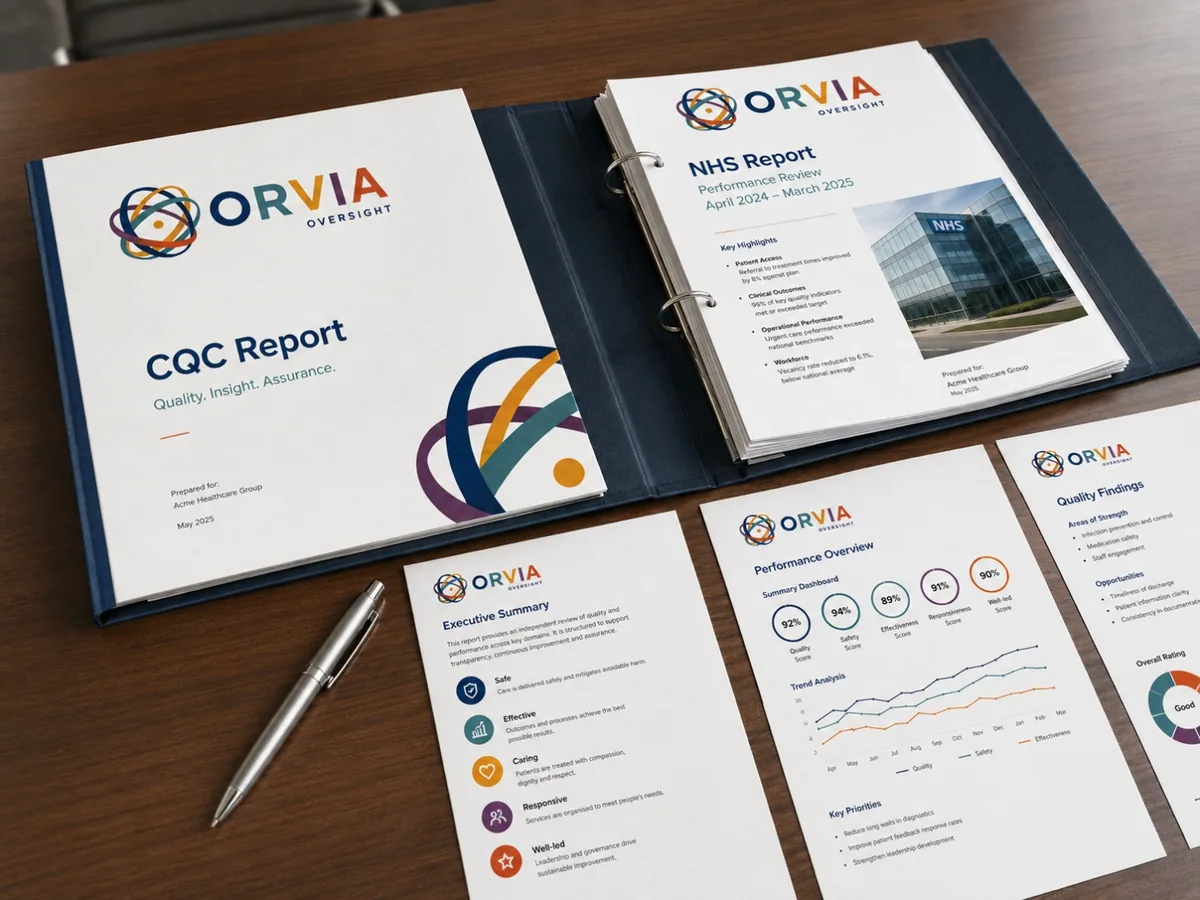
Declared & documented
Policies, care plans, reports, dashboards, incidents, audits, emails and correspondence — what was said should happen and what was recorded.
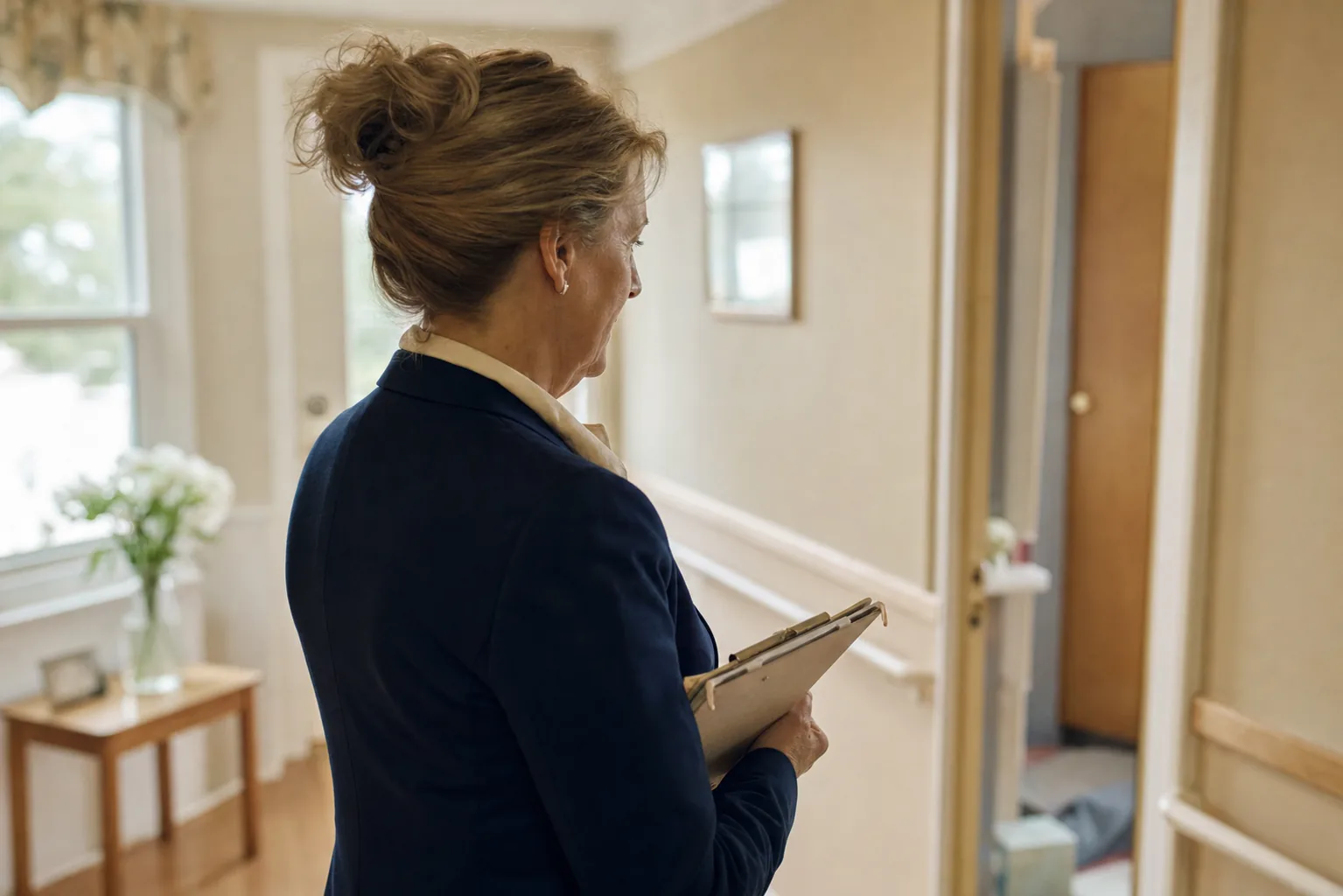
Observed
The environment, practice, interactions, decisions and day-to-day operational reality somebody would actually find if they looked beyond the report.

Experienced
The person's voice, family knowledge, frontline experience and what support feels like in real life. This is evidence too — considered in context, not treated as automatic proof.
What good looks like
The point is not to find fault. The point is to make the real situation visible.
Sometimes the evidence confirms that people are receiving thoughtful, engaged support. Sometimes it exposes a gap between intention and reality. Both findings are useful when they are reached fairly.


What we believe
You do not need a professional title to notice that something is not right.
Professional expertise matters enormously. But families hold history. Frontline staff see day-to-day reality. The person receiving support owns their lived experience. Records can reveal contradictions. Good decisions need those perspectives brought together.
See the person
Do not reduce somebody to a diagnosis, behaviour, report or professional interpretation.
Test the evidence
Concern deserves to be examined properly. Instinct is a signal, not proof.
Follow it through
A finding matters only if somebody owns the correction and the outcome is reviewed.
Trust your gut
Trust your gut. Then test the evidence.
Sometimes something feels wrong before it appears in a report. Someone goes quiet. People become defensive. Bad news stops travelling upwards. A service looks immaculate on paper but feels different in practice.
“Instinct is the signal. Evidence is the test.”
Notice it → Explore it → Evidence it → Understand it → Correct it → Follow it through.

The ORVIA Method
Five stages. One rule: never claim more than the evidence supports.
Start with the person, event, environment, records and operational reality.
Test context, assumptions, alternative explanations and what may be missing.
Bring chronology, decisions, gaps, relationships, risks and ownership together.
Separate fact, evidence, inference, opinion, uncertainty and what cannot be determined.
Turn understanding into proportionate action, ownership, review and follow-through.